Summary:
Opmed.ai has expanded its AI optimization platform into inpatient rehabilitation to help centers improve scheduling accuracy, reimbursement compliance, and care delivery efficiency.
Key Takeaways:
- Solving a costly problem: The platform reportedly replaces manual IRF scheduling that can drive high error rates, compliance risk, and lost revenue.
- Delivering measurable gains: Reported results include a 95% reimbursement approval rate, a 90% reduction in patient wait times, and double-digit improvements in billable hours, treatment value, and provider utilization.
- Enhancing care continuity: AI-driven scheduling can improve therapist continuity and allow clinicians to spend more time delivering care rather than managing logistics.
Opmed.ai, a company with an AI optimization platform for healthcare also called Opmed.ai, has launched a new solution designed specifically for rehabilitation centers, extending its technology beyond operating rooms to one of the most complex areas of care delivery.
Why It Matters
Inpatient rehabilitation facilities (IRFs) face scheduling error rates of 20%–30%, driving costly compliance risks and reimbursement denials, with one study finding 175 of 220 IRF stays failed Medicare requirements. Compounding the challenge, high demand, staffing shortages, and administrative overload strain already slim margins. Yet most centers still rely on manual scheduling workflows that take multiple resources 4–5 hours per day, leading to constant reshuffling, missed sessions, and idle hours, ultimately reducing revenue and harming patient outcomes.
Opmed’s Platform
According to the company, Opmed.ai’s rehabilitation platform leverages advanced AI to balance patient availability, therapist schedules, insurance rules, continuity of care, and individualized treatment plans simultaneously to generate the most effective schedule possible. Tested across rehabilitation centers in the U.S. and abroad, the platform reportedly delivered significant results, increasing billable hours and improving treatment value by double digits. Additionally, the company claims the platform reduced patient wait times while providing markedly better continuity of care with the same primary therapist. The company says Opmed.ai also ensured inpatient treatments complied with CMS requirements for Medicare and Medicaid reimbursement
Significant Results
Tested across rehabilitation centers in the U.S. and abroad, according to Opmed.ai, the platform delivered significant improvements:
- 95% reimbursement approval rate with inpatient rehabilitation facilities
- 90% reduction in patient wait times
- 12% increase in billable hours
- 13% improvement in treatment value
- 29% improvement in provider utilization
“This is an inflection point for the rehabilitation sector,” says Dr Mor Brokman Meltzer, co-founder and CEO of Opmed.ai. “Rehabilitation centers are under enormous pressure to do more with less, yet they’re still constrained by scheduling systems that weren’t built for their complexity. Our technology proves that when you remove these operational barriers, everyone benefits: patients enjoy better outcomes, therapists spend more time delivering care, and centers gain the capacity they didn’t know they had.”
“We were amazed by how quickly the platform adapted to our real-world constraints,” says Dr Laura Mraz, founder of Three Birds One Mission. “In a short period of time, we saw a meaningful improvement in provider scheduling and efficiency, allowing our teams to focus more on delivering care rather than managing logistics. It’s been a true game-changer for rehabilitation operations.”
Opmed.ai and Three Birds One Mission jointly presented results, including the 29% provider utilization improvement, at the 2025 American Congress of Rehabilitation Medicine.
You can learn more at www.opmed.ai and on LinkedIn.
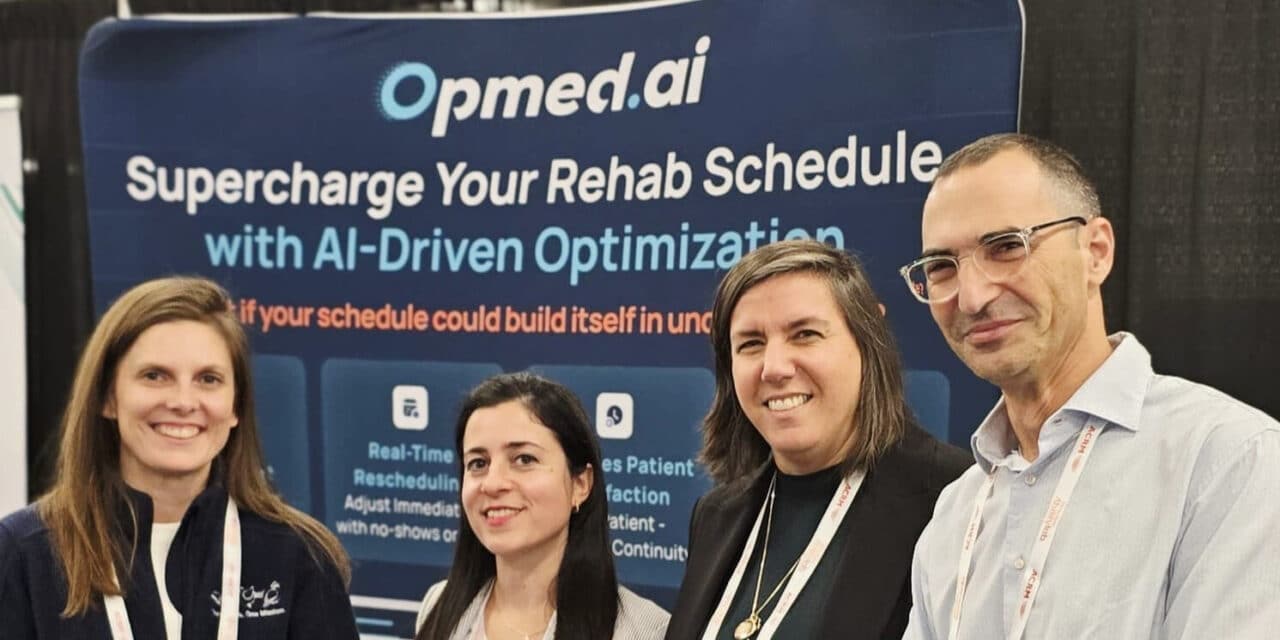
Featured image: Opmed.ai